Intime Komplizenschaft - ein arides Flirren
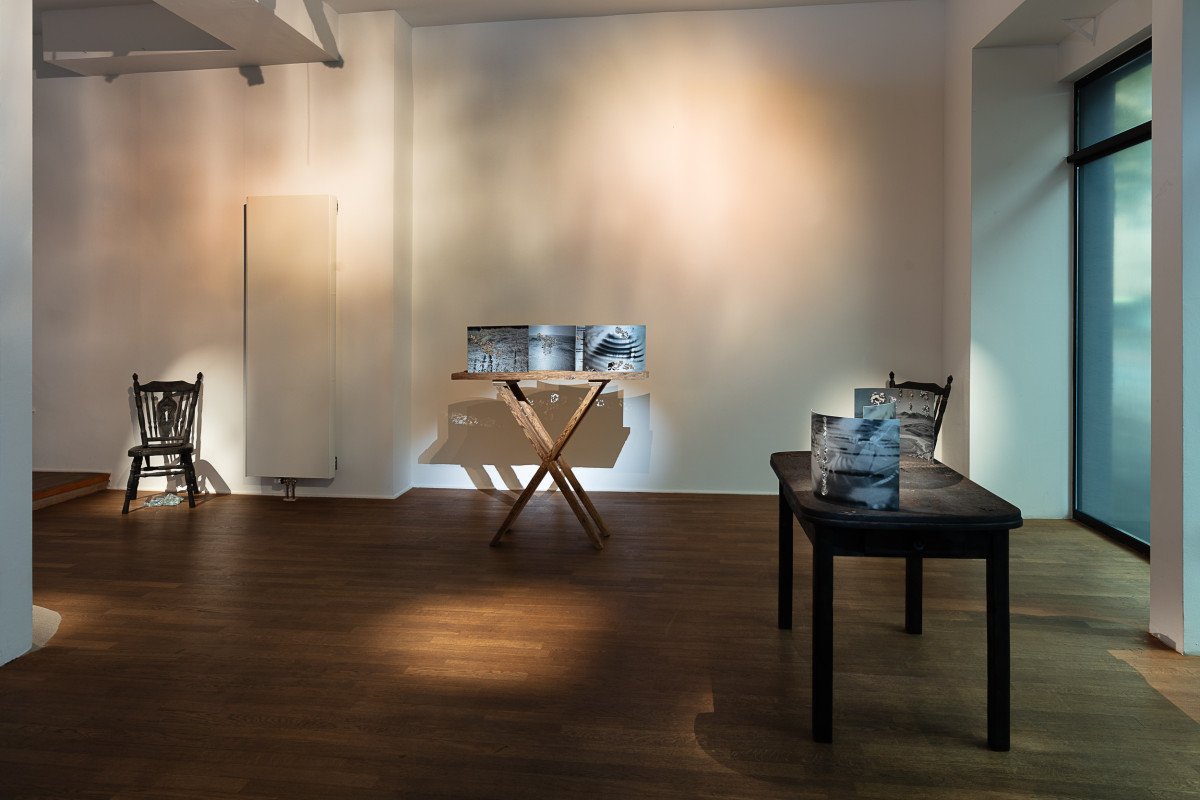
Rauminstallation, 2026
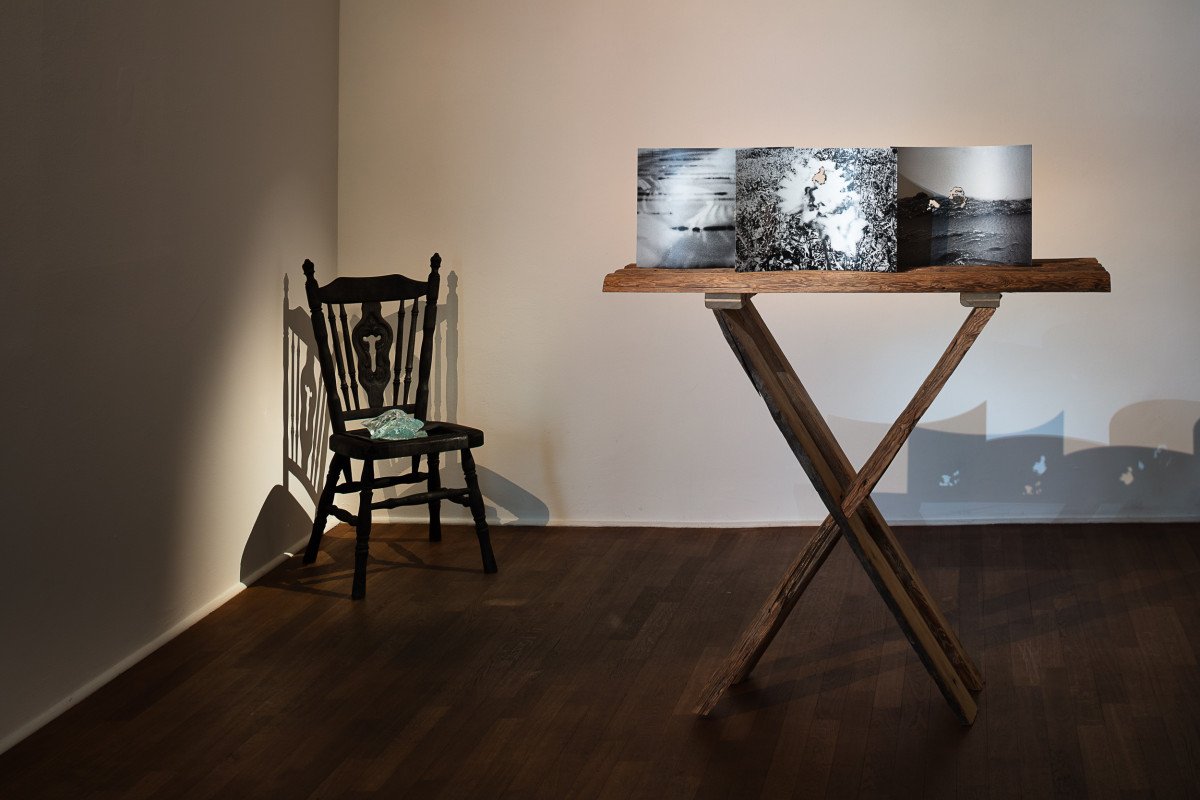
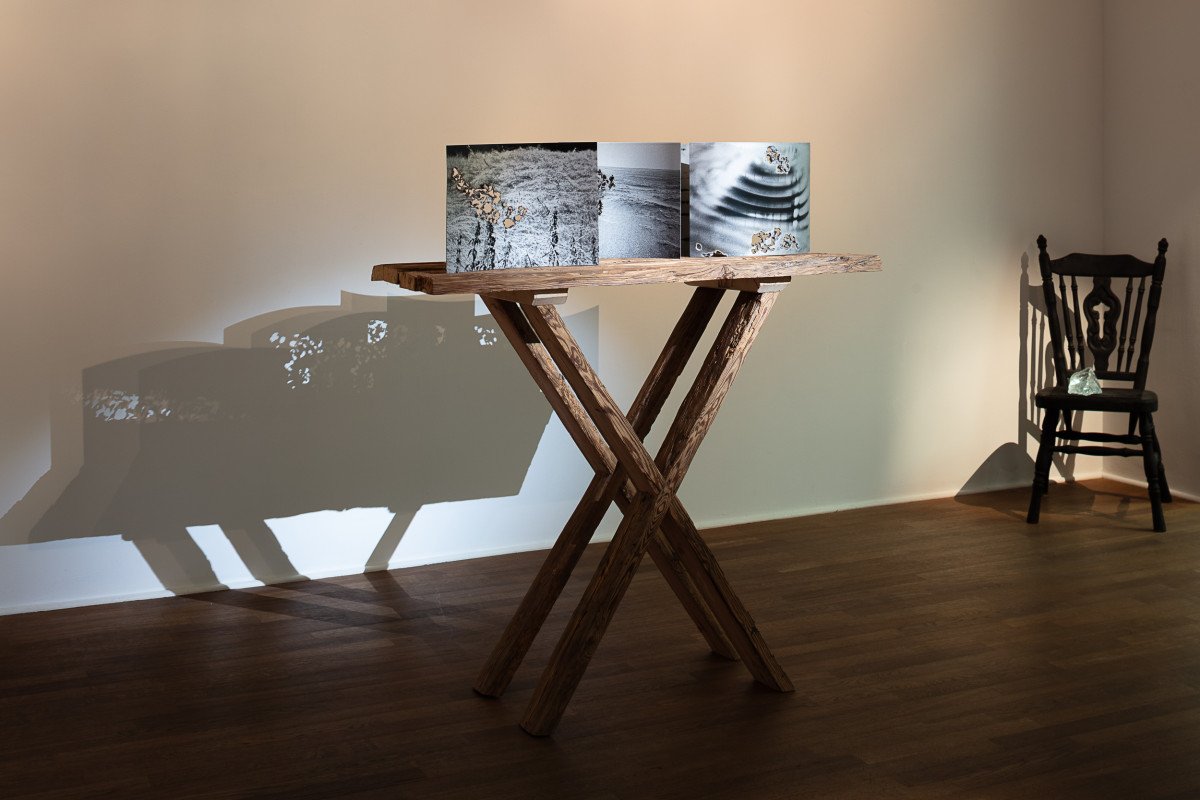
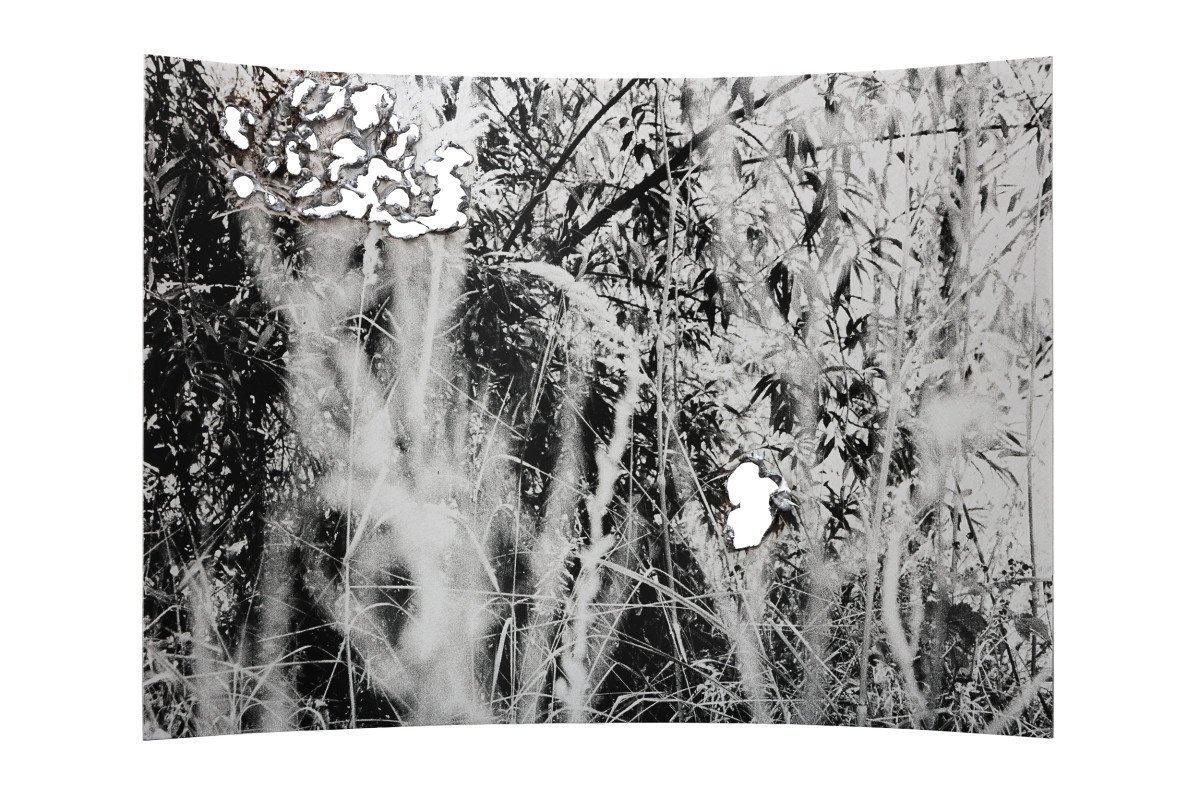
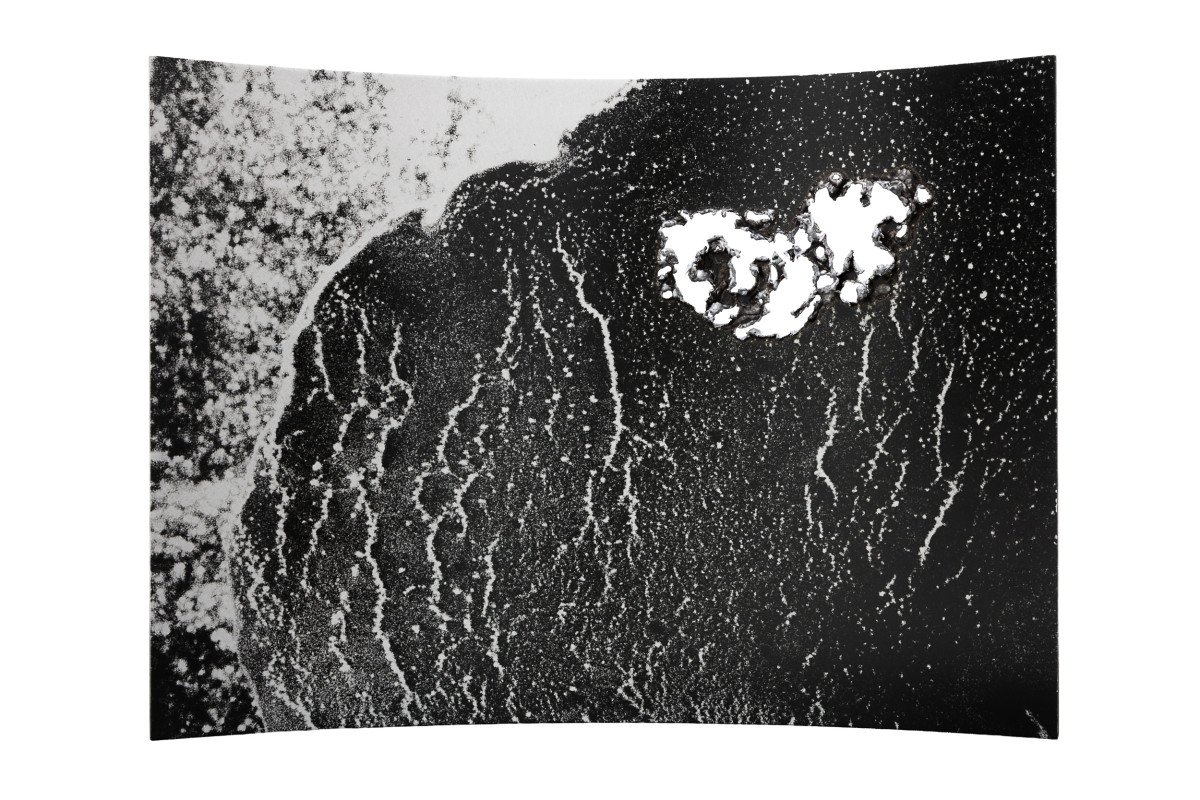
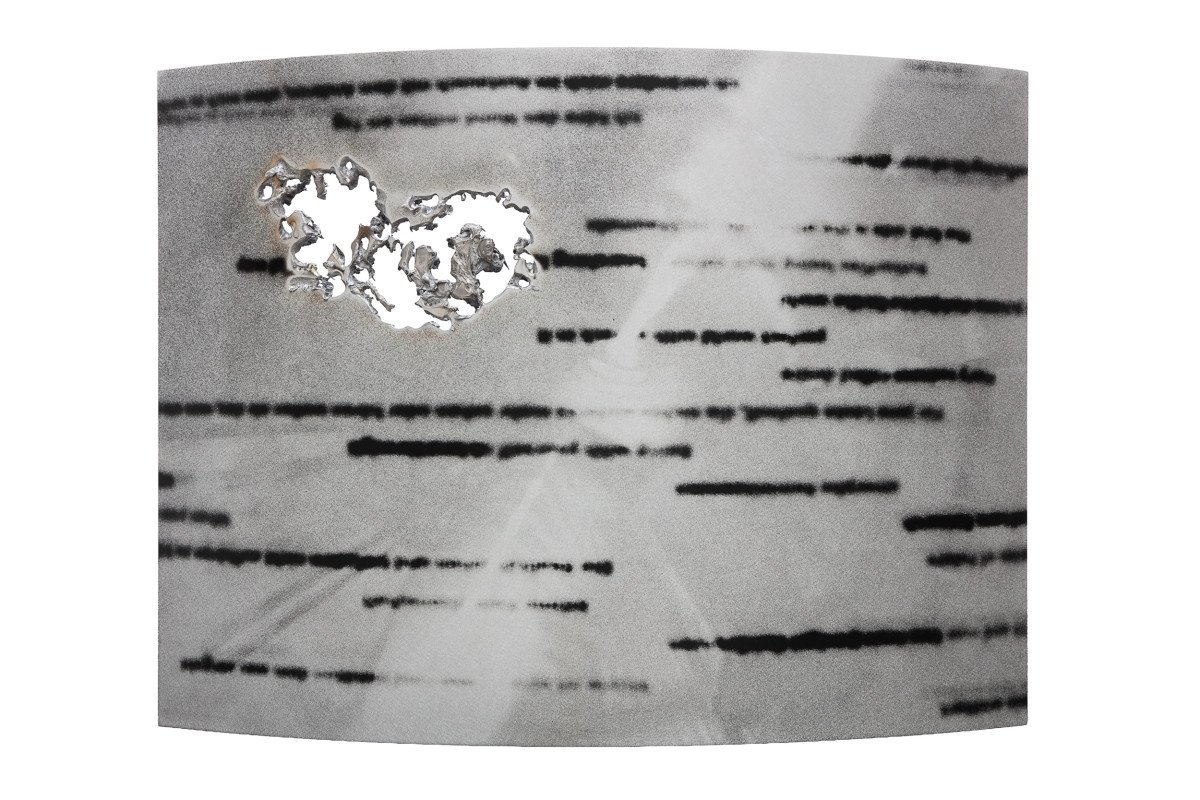
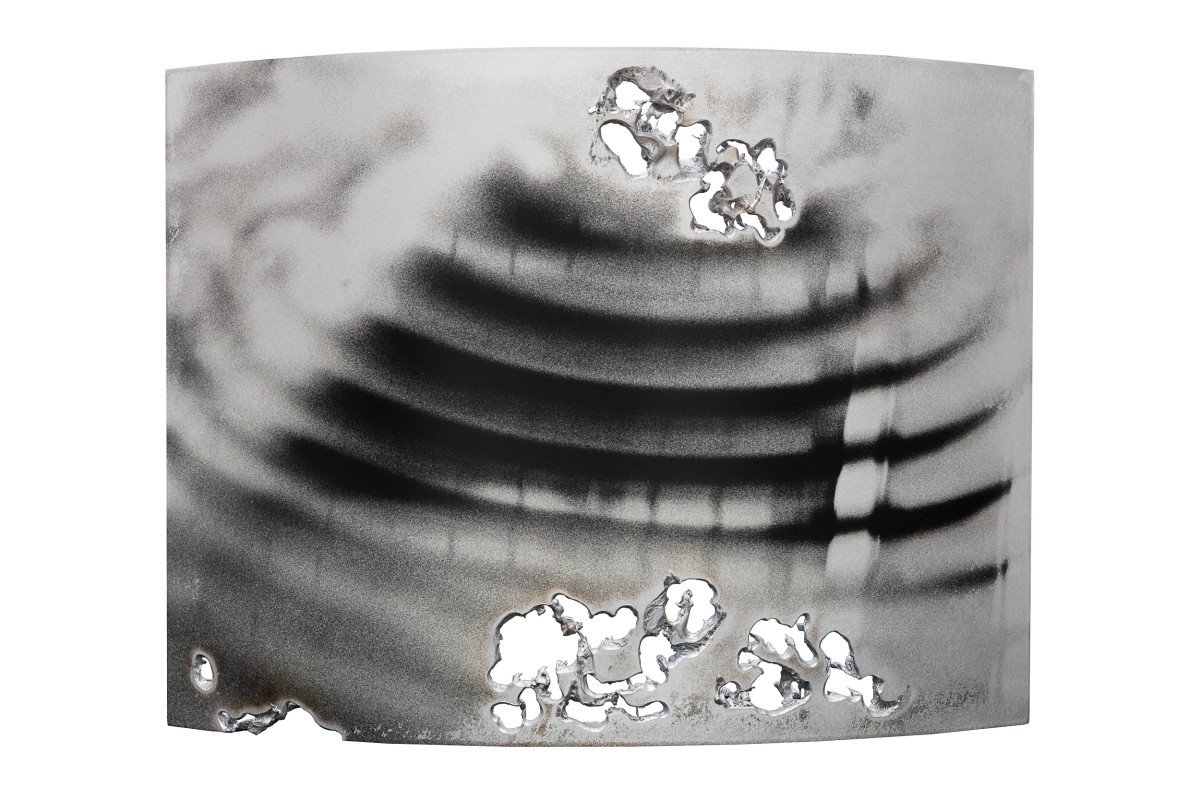
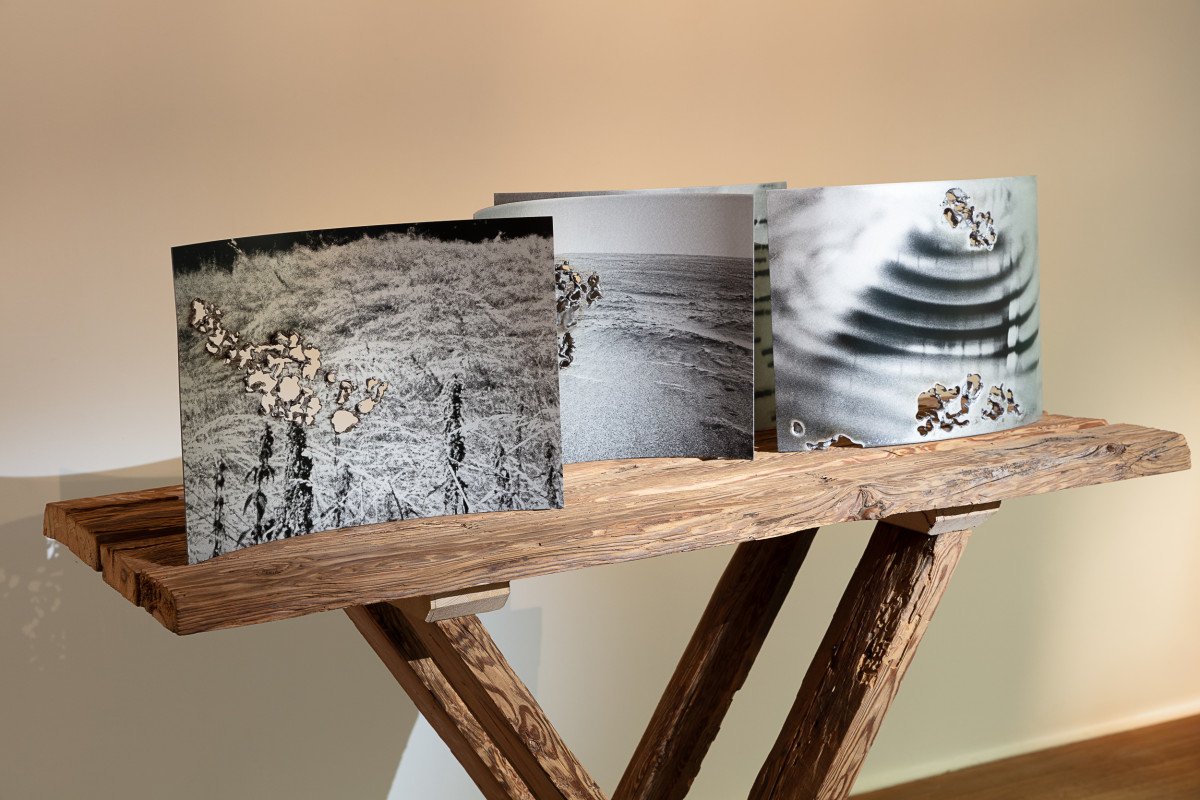
Fotografische Objekte
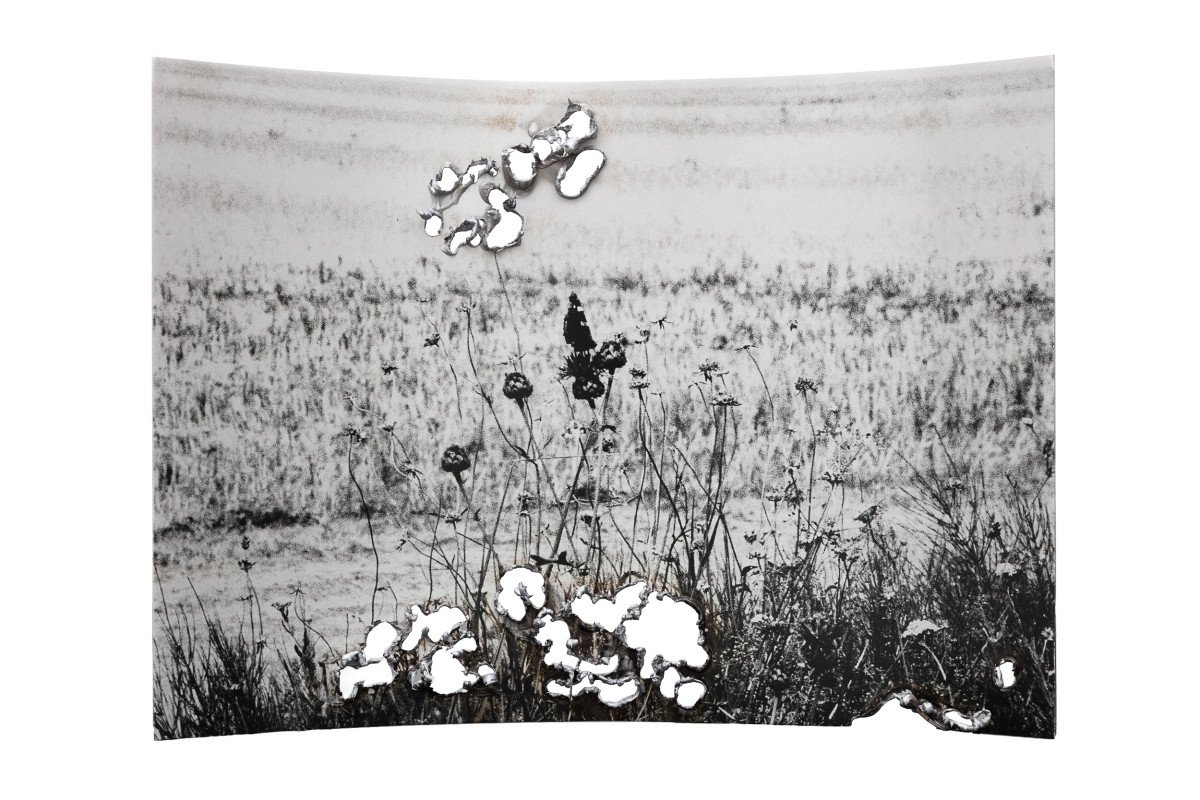
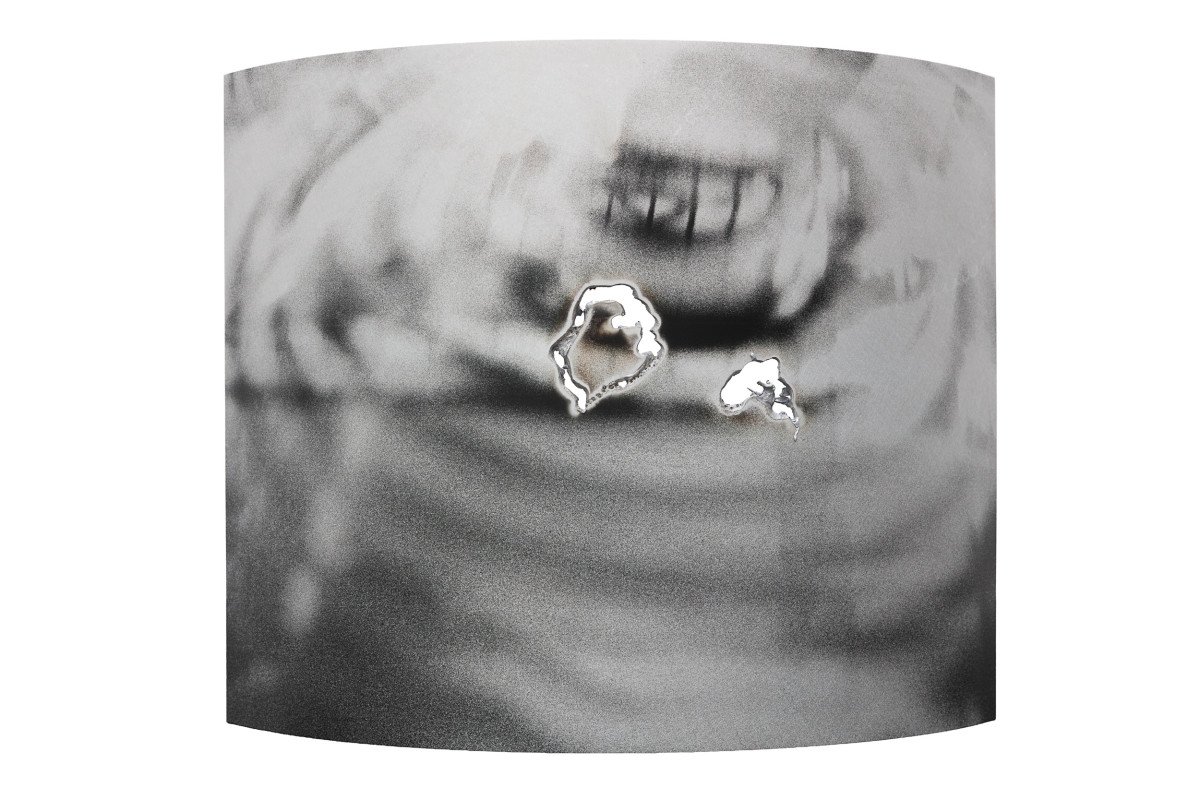
Aus der Serie Himmelgeister Rheinbogen – Erster bis Sechster Schatten am Rhein, 2026
Beidseitiger UV-Druck auf Aluminium, Lack
Je 29,7 × 42 × 10 cm
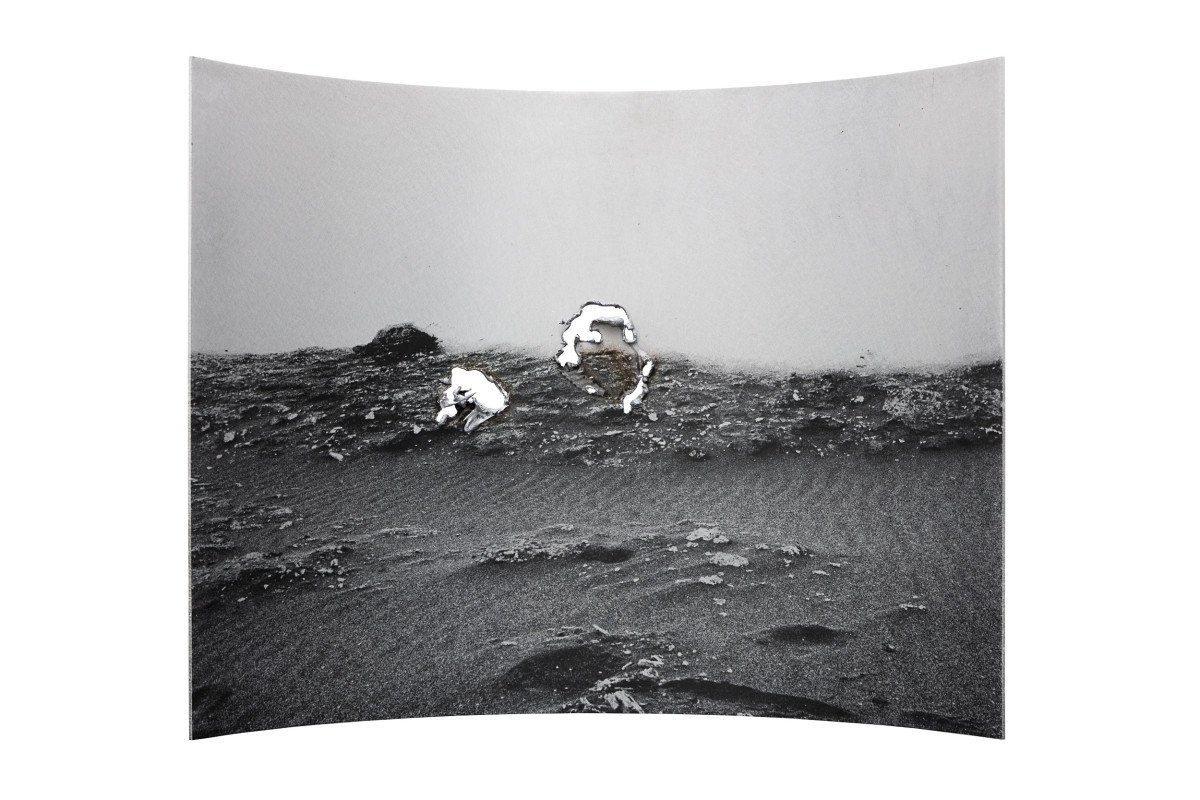
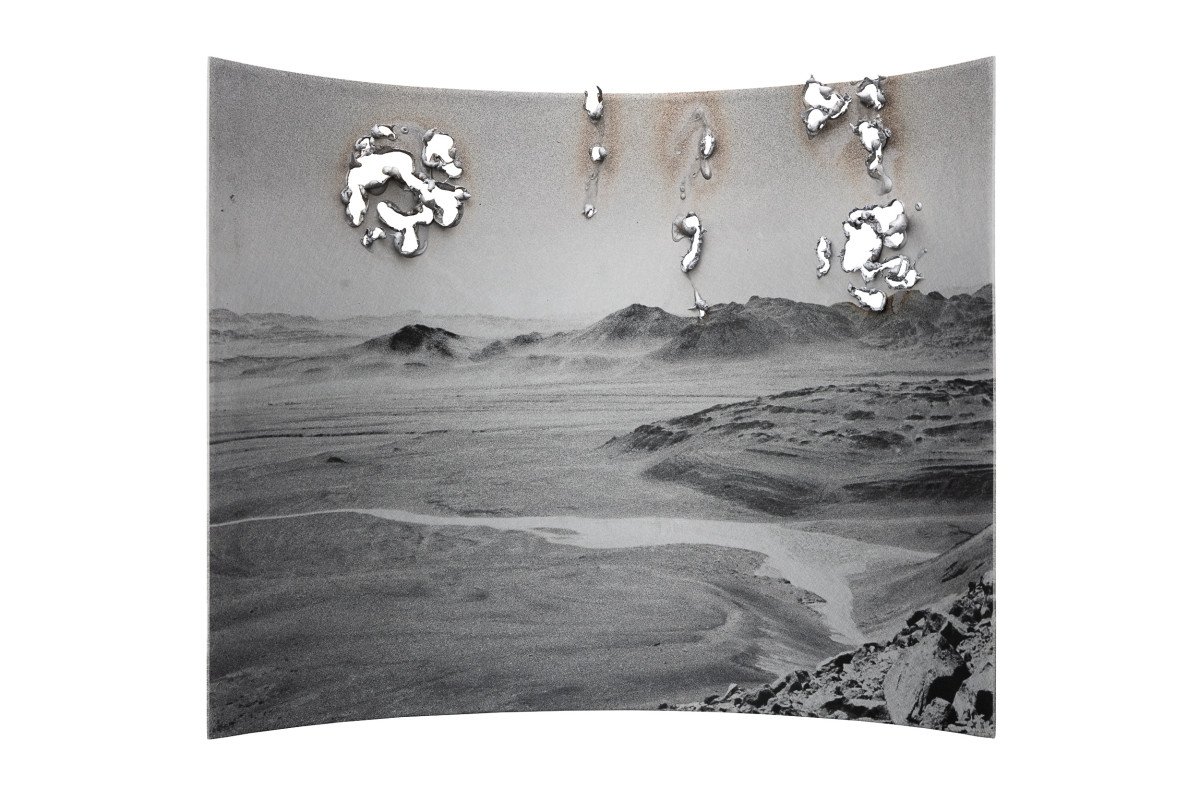
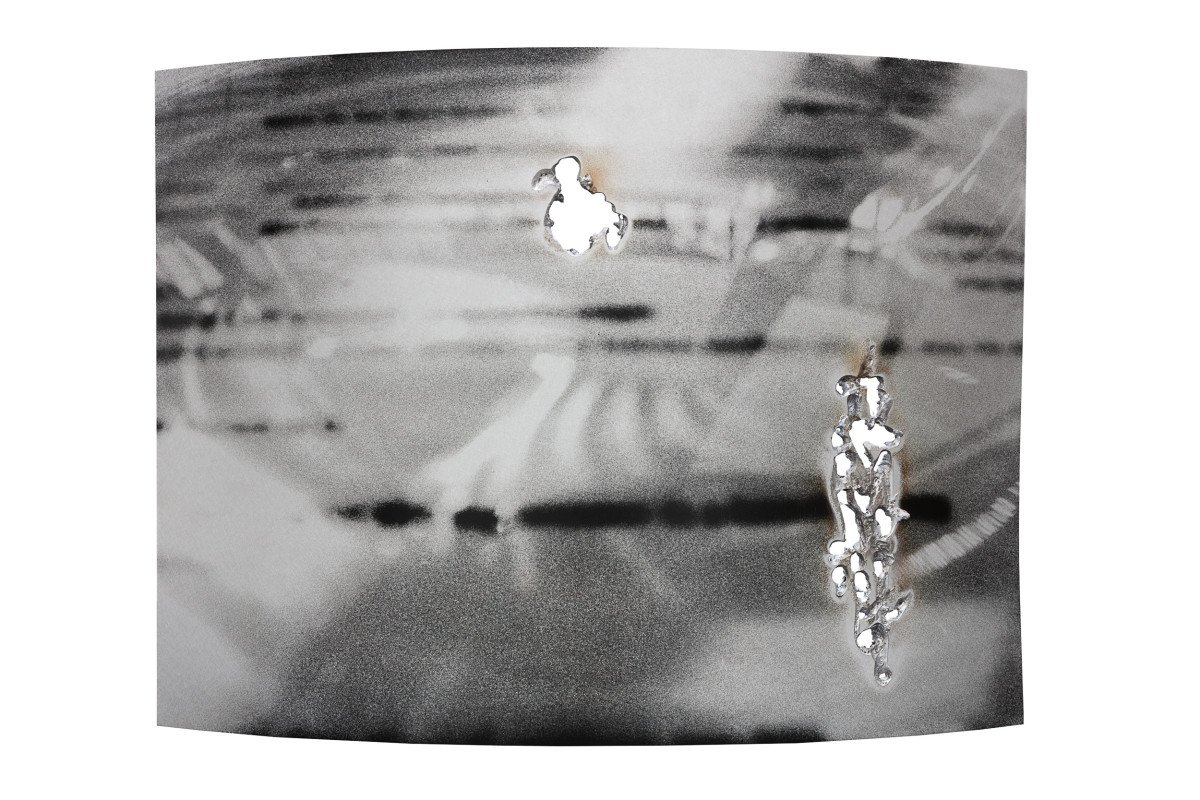
Aus der Serie Atacama-Wüste – Erstes bis Neuntes metallisches Licht, 2026
UV-Druck auf Aluminium, Lack
Je 29,7 × 42 × 10 cm
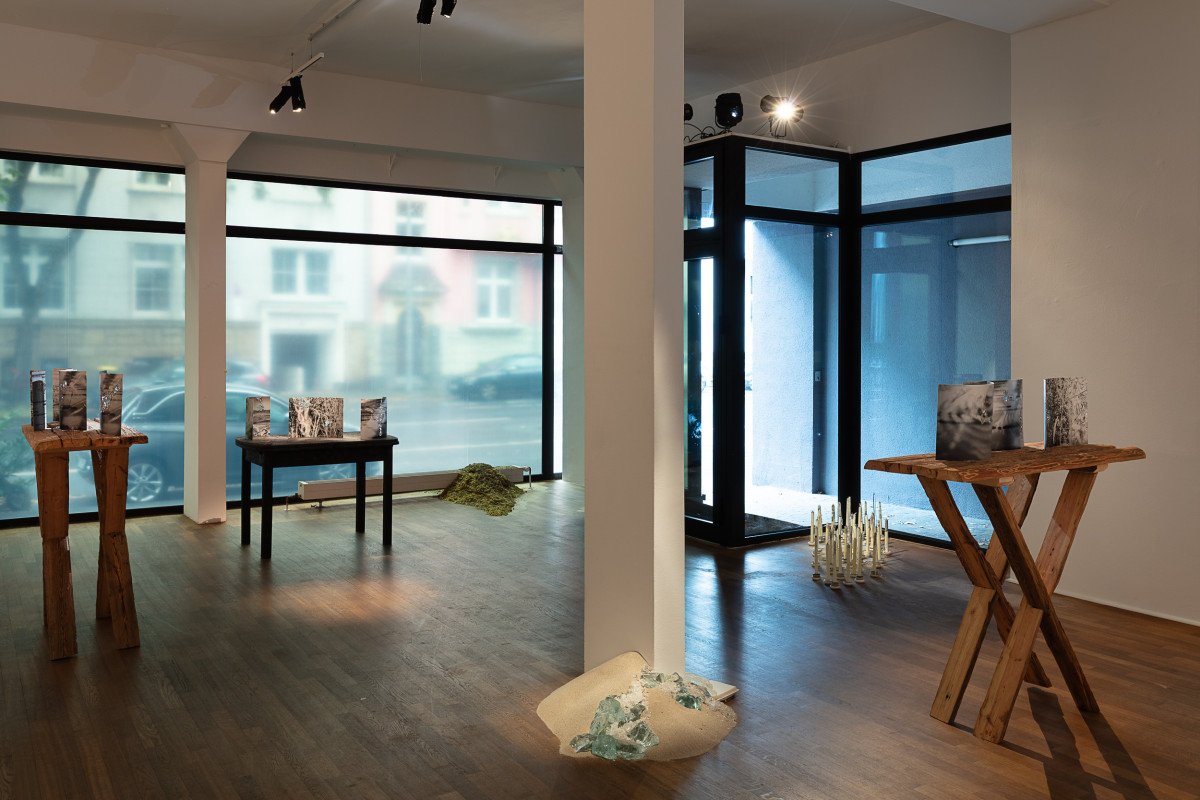
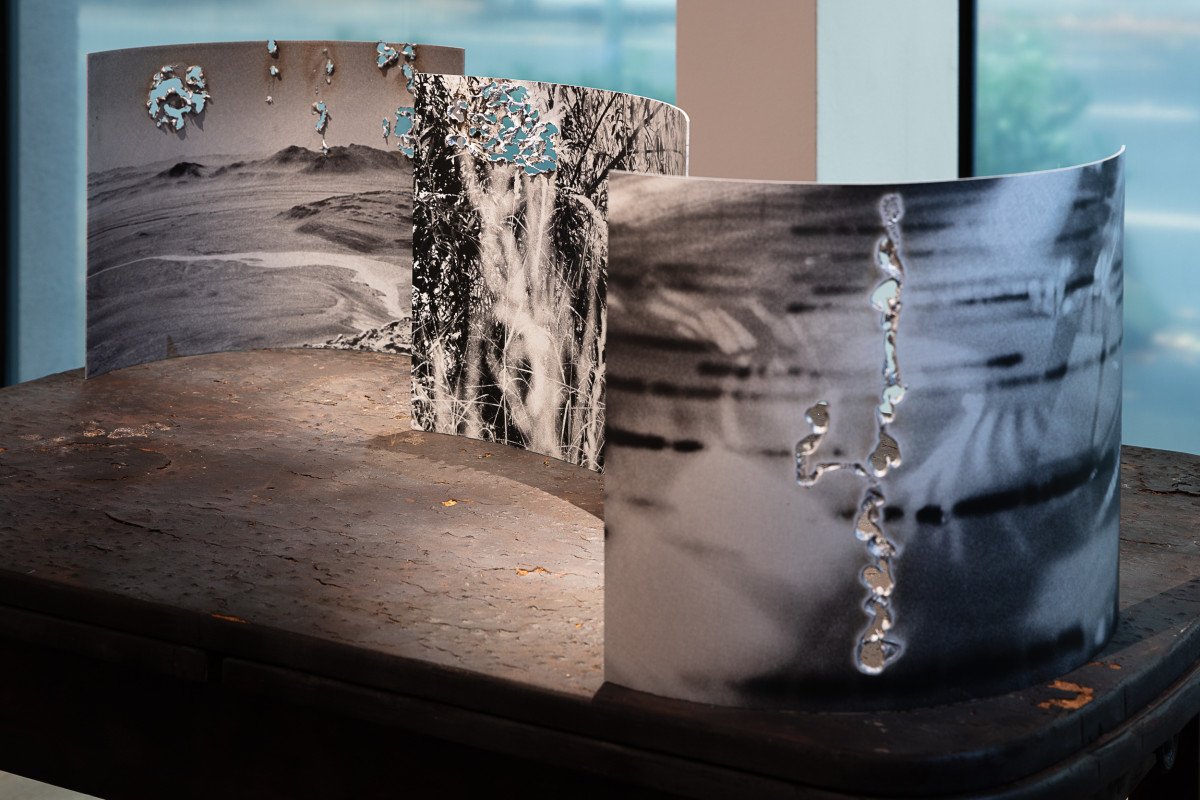
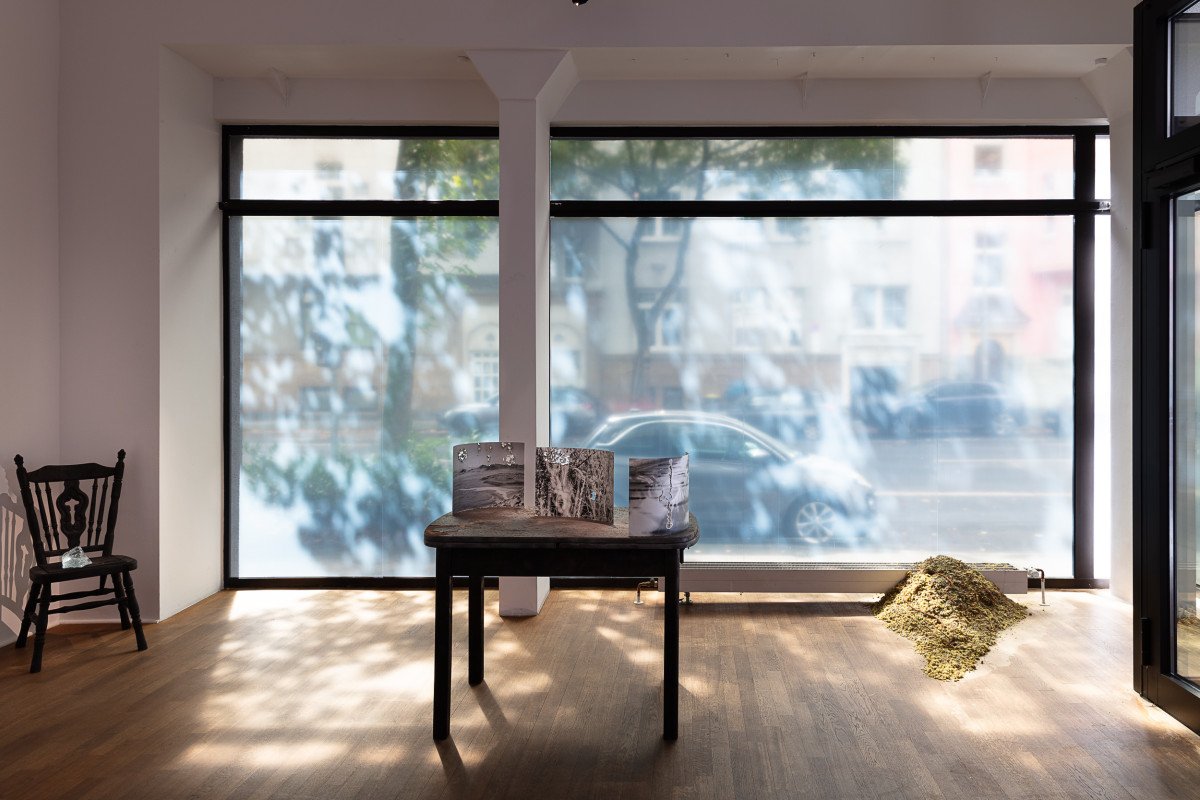
Beide Serien sind auf einem angebrannten Tisch und zwei eigens gefertigten Tischen aus Altholz angeordnet.
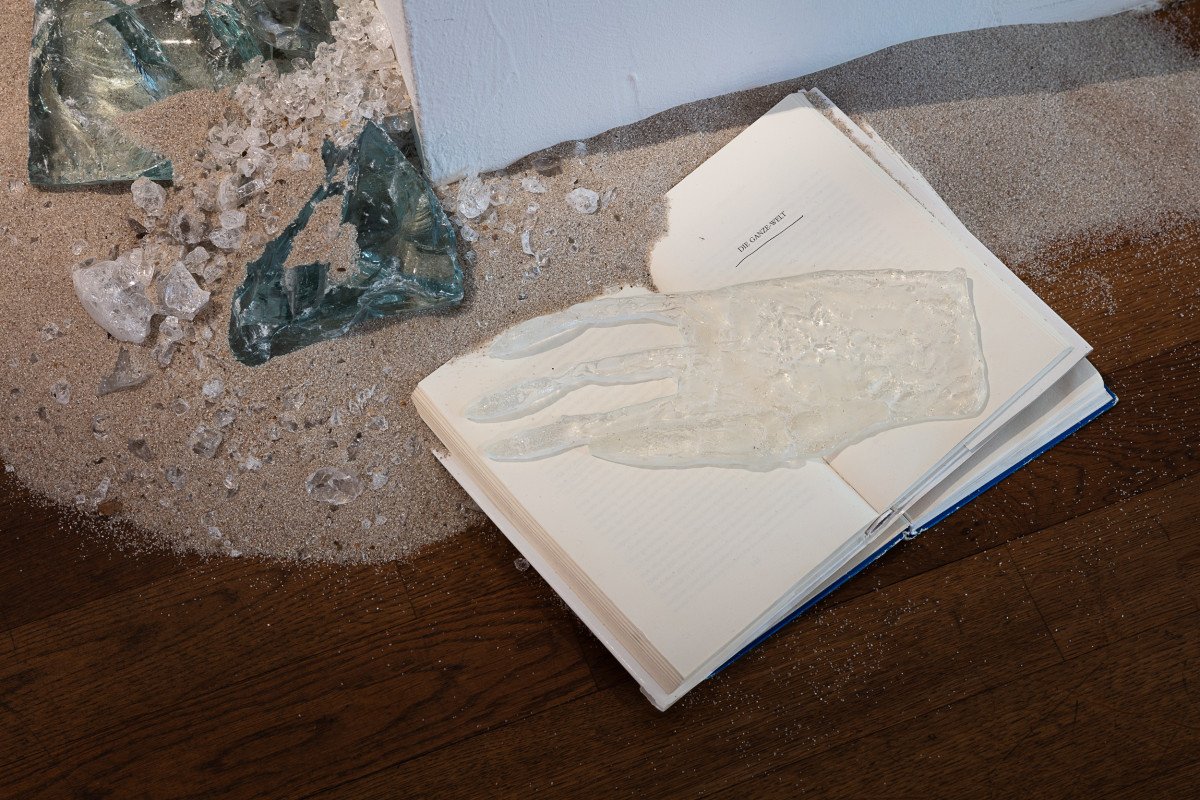
Sandinstallation
Quarzsand, verschiedene Glasbrocken sowie Ohne Titel (Glashand), 2026, Glas, 26 × 10 × 2 cm, auf drei Büchern von Édouard Glissant liegend
Olfaktorische Installationen
Ohne Titel (aus der Serie Glaskerzen), 2026
Glas
Maße variabel
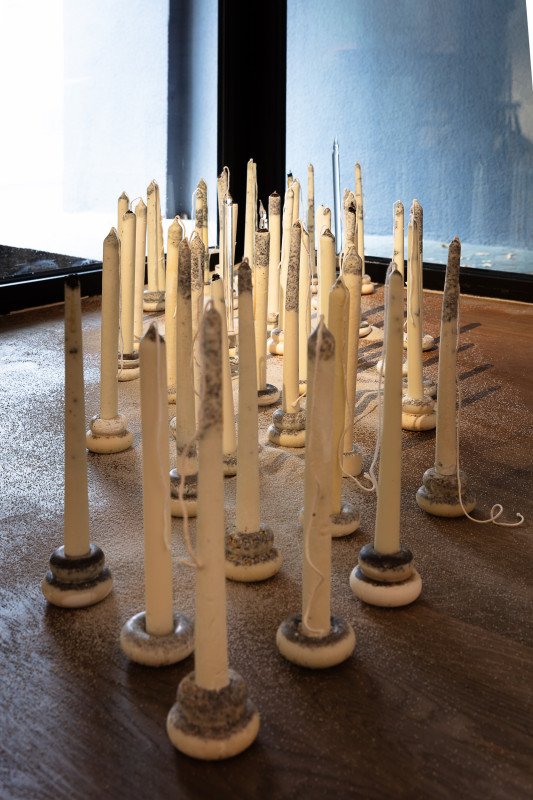
Ohne Titel (aus der Serie Wachskerzen), 2026
Wachs, Kräuter aus Niederbayern, Sand
Maße variabel
Selbst entwickelter Raumduft in Stövchen
Stuhlinstallation
Zwei Stühle mit Glasbrocken
Ort: Galerie3ap
Kuration: Aileen Treusch
Photos: JMR-Dokumentation
Text: Sophia Naumann
In ihrer Ausstellung Intime Komplizenschaft – ein arides Flirren formu-
liert Nadine Karl einen intuitiven Zugang zum archipelischen Denken
nach Édouard Glissant. Aus dramaturgischer Lichtsetzung, fotografi-
schen Objekten und olfaktorischen Komponenten sowie Naturmateri-
alien entsteht ein multisensorischer Erfahrungsraum, in dem unter-
schiedliche Lebensformen als tief miteinander verflochtene Gefüge
nahbar werden.
Ausgangspunkt bilden Karls künstlerisch-investigativen Recherchen
über zwei konträre und geografisch weit entfernte Ökosysteme: die
chilenische Atacama-Wüste und das Naturschutzgebiet Himmelgeis-
ter Rheinbogen in Düsseldorf. Während die Atacama als eine der
trockensten Regionen der Erde im Laufe der Jahre zu einem zentralen
Schauplatz globaler Rohstoffgewinnung von Lithium und Kupfer ge-
worden ist, steht der Rheinbogen gegenwärtig unter gesetzlichem
Schutz vor extraktiven Eingriffen und irreversiblen Folgeschäden. In
ihrer zeitübergreifenden Gegenüberstellung spiegeln beide Orte damit
stellvertretend eine globale Realität wider, in der Konsum und Fort-
schritt an einem Ort verheerende ökologische Wunden anderorts
verursachen.
Diese komplexen Verstrickungen übersetzt Karl in ein immersives
Moment, das grundlegend von eigenen Erinnerungen geprägt ist.
Tragendes Element der Installation sind fotografische Objekte aus
konvex gebogenen Aluminiumplatten, die mit Landschaftsmotiven aus
beiden Regionen monochrom bedruckt worden sind. Die Bildausschnit-
te variieren in Größe, Schärfe und Erkennbarkeit: Blüten, Blätter oder
Gestein sind teils eindeutig identifizierbar, teils nur als abstrahierte
Konturen wahrnehmbar. Die Wölbung der Platten verwehrt zudem
einen vollständigen Überblick und entzieht die Landschaftsmotive
damit einer linearen Lesbarkeit. Auf den Rückseiten befinden sich
geschwärzte Notizfragmente aus dem persönlichen Archiv der Künst-
lerin. Sie verweisen auf die Brüchigkeit unserer Wahrnehmung sowie
auf die hinter der Oberfläche verborgenen Geschichten von Extraktion
und dem damit einhergehenden Gewinn und Verlust. Auch die räumli-
che Setzung der Objekte folgt einer archipelischen Logik: Sie greifen
ineinander und umarmen sich, treten in Beziehung, bleiben zugleich
aber bewusst auf Distanz, um ihre Autonomie zu bewahren: In dieser
Verweigerung einer vollständigen Durchleuchtung zeigt sich ein Recht
auf Opazität, das Verbundenheit und Differenz ganz selbstverständ-
lich nebeneinander zulässt.
Diese Haltung setzt sich in der Stofflichkeit der sinnesübergreifenden
Installation fort. Der Regenduft Petrichor symbolisiert Erneuerung und
verweist gleichzeitig auf die zunehmende Kostbarkeit von Wasser. Das
verwendete Geosmin erinnert an den erdigen Geruch feuchter Böden
und bringt diese olfaktorische Erfahrung in den Raum. Teils flackernde,
in den Raum ragende Kerzen auf dem Boden greifen das aride Flirren
der atmosphärischen Lichtsetzung an den Wänden auf, während sich
weißer Quarzsand und zersplitterte Glasblöcke als geologische und
künstlich transformierte Körper im Raum verbindend ablagern. Nicht
zuletzt schreiben getrocknete Gräser und Kräuter aus Karls nieder-
bayerischer Herkunft persönliche und überregionale Geschichte als
sinnlich wahrnehmbare Zeitspuren in dieses mehrschichtige Narrati-
onsmuster ein.
Mit der Präsentation erweitert Karl das archipelische Denken um eine
dezidiert ökofeministische Perspektive, in der Vergangenheit, Gegen-
wart und Zukunft miteinander verwoben werden: Die Besucher*innen
sind eingeladen, Landschaften nicht als kurzfristig verwertbare Res-
sourcen, sondern als verletzliche, historisch gewachsene und lebendi-
ge Beziehungsgeflechte zu verstehen und neu kennenzulernen. Die
intime Komplizenschaft kreiert hierbei einen atmosphärischen Schwel-
lenraum, der die Chance auf Fürsorge im Spannungsfeld von Krise und
Heilung, von Nähe und Distanz birgt.
Installation, 2026
Photographic Objects
From the series Himmelgeister Rheinbogen – First to Sixth Shadow on the Rhine, 2026
Double-sided UV print on aluminium, lacquer
29.7 × 42 × 10 cm each
From the series Atacama Desert – First to Ninth Metallic Light, 2026
UV print on aluminium, lacquer
29.7 × 42 × 10 cm each
Both series are arranged on a scorched table and two custom-built tables made from reclaimed wood.
Sand Installation
Quartz sand, various pieces of glass, and Untitled (Glass Hand), 2026, glass, 26 × 10 × 2 cm, resting on three books by Édouard Glissant
Olfactory Installations
Untitled (from the series Glass Candles), 2026
Glass
Dimensions variable
Untitled (from the series Wax Candles), 2026
Wax, herbs from Lower Bavaria, sand
Dimensions variable
A room fragrance developed by the artist, diffused using tealight warmers
Chair Installation
Two chairs with pieces of glass
Venue: Galerie3ap
Curated by Aileen Treusch
Photos: JMR-Dokumentation
Text by Sophia Naumann
In her exhibition Intime Komplizenschaft – ein arides Flirren (Intimate Complicity – an arid shimmer), Nadine Karl formulates an intuitive approach to archipelagic thinking as conceived by Édouard Glissant. Through dramatic lighting, photographic objects and olfactory elements, as well as natural materials, a multi-sensory space of experience is created in which different forms of life become accessible as deeply interwoven structures.
The starting point is Karl’s artistic and investigative research into two contrasting and geographically distant ecosystems: the Chilean Atacama Desert and the Himmelgeister Rheinbogen nature reserve in Düsseldorf. Whilst the Atacama, as one of the driest regions on Earth, has over the years become a key hub for the global extraction of lithium and copper, the Rheinbogen is currently under legal protection against extractive activities and irreversible consequential damage. In their cross-temporal juxtaposition, both locations thus reflect a global reality in which consumption and progress in one place cause devastating ecological damage elsewhere.
Karl translates these complex interconnections into an immersive moment that is fundamentally shaped by his own memories. The central element of the installation consists of photographic objects made from convexly curved aluminium panels, which have been printed in monochrome with landscape motifs from both regions. The image details vary in size, sharpness and recognisability: flowers, leaves or rocks are sometimes clearly identifiable, whilst at other times they are perceptible only as abstracted contours. The curvature of the plates also prevents a complete overview, thereby depriving the landscape motifs of linear legibility. On the reverse sides are blacked-out fragments of notes from the artist’s personal archive. They allude to the fragility of our perception as well as to the stories of extraction hidden beneath the surface and the associated gains and losses. The spatial arrangement of the objects also follows an archipelagic logic: they interlock and embrace one another, entering into a relationship, whilst at the same time deliberately maintaining a distance in order to preserve their autonomy: in this refusal to allow complete transparency, a right to opacity is revealed, one that quite naturally allows connectedness and difference to coexist.
This approach is reflected in the materiality of the multisensory installation. The scent of rain, known as ‘petrichor’, symbolises renewal and simultaneously highlights the increasing preciousness of water. The geosmin used evokes the earthy scent of damp soil and brings this olfactory experience into the space. Candles on the floor, some flickering, protruding into the space, echo the arid shimmer of the atmospheric lighting on the walls, whilst white quartz sand and shattered glass blocks settle in the space, acting as connecting elements in their roles as geological and artificially transformed forms. Last but not least, dried grasses and herbs from Karl’s Lower Bavarian origins inscribe personal and supra-regional history as sensorily perceptible traces of time into this multi-layered narrative pattern.With this presentation, Karl expands archipelagic thinking to include a decidedly ecofeminist perspective in which the past, present and future are interwoven: visitors are invited to understand and rediscover landscapes not as resources to be exploited in the short term, but as vulnerable, historically evolved and living networks of relationships. This intimate complicity creates an atmospheric liminal space that holds the potential for care amidst the tension between crisis and healing, between closeness and distance.